Learn why successful companies embrace the liquid workforce
Golang developers

Hire Golang developers who build fast, concurrent systems in Go

Pre-vetted Go developers who join your team and work under your brand. Nearshore on UK hours, or onshore where the work needs it. Daily or hourly rates, no minimum term.

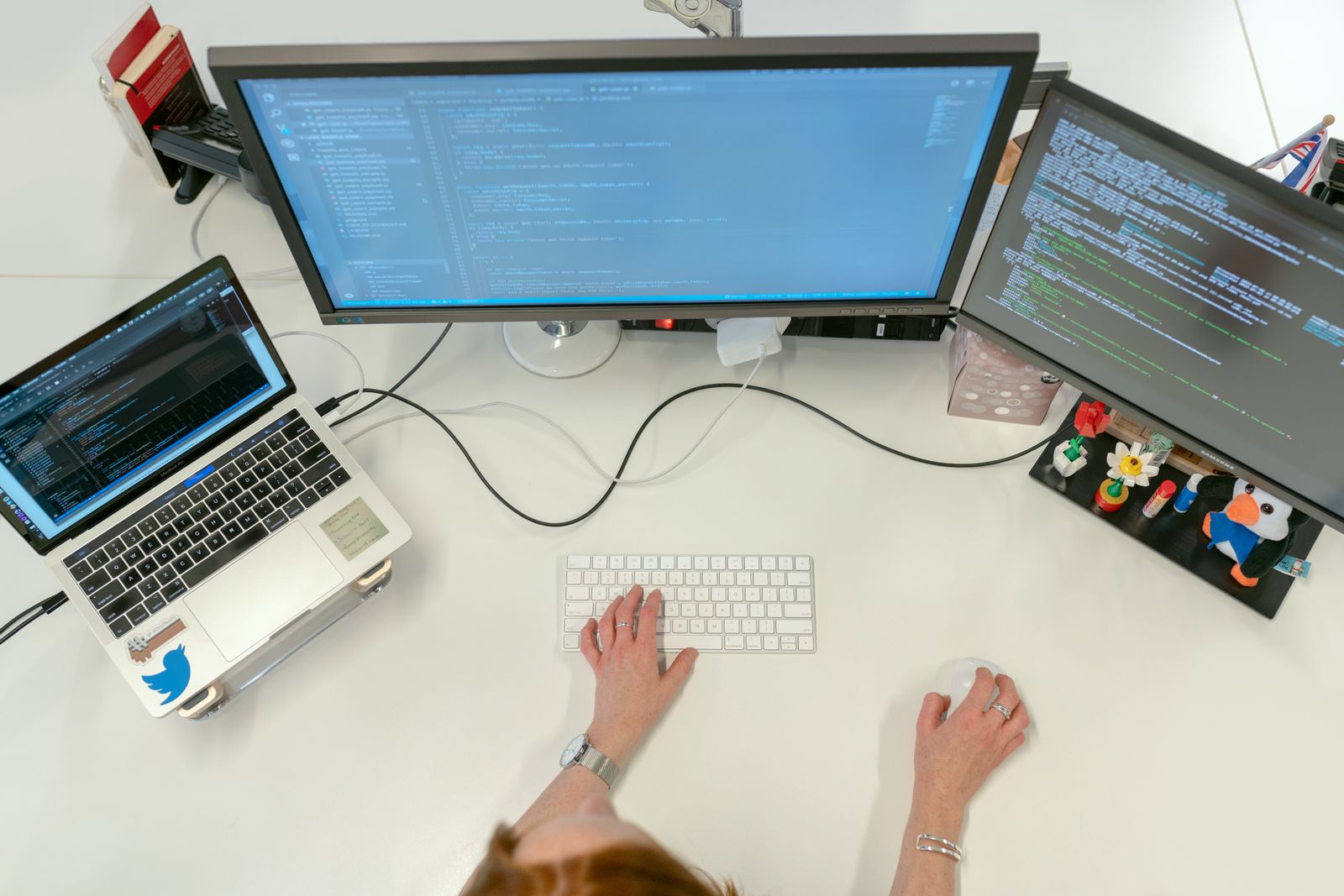
Woman developer focused on her laptop in a modern office

What a Go developer does

A Go developer (the language is also called Golang) builds back-end services, APIs and platform tooling in Go, a language designed for concurrency, fast compilation and straightforward deployment.

‍

On a delivery team, a Go developer typically:

  • builds HTTP and gRPC services that handle high request volumes with low latency
  • writes concurrent processing using goroutines and channels
  • designs and maintains APIs that connect services or expose data to front ends and mobile apps
  • builds CLI tools, internal tooling and automation that the wider team depends on
  • writes tests, manages dependencies with Go modules and ships through a CI/CD pipeline

‍

Go developers work at the service and platform layer. Back-end developers cover several languages and frameworks, and DevOps engineers build the pipelines and infrastructure the services run on. See those pages, or browse all our skills.

Close-up of programming code on a laptop screen

When to bring in Go developers

Go developers make the difference when the work needs the performance, concurrency or simplicity that Go was designed for.

Developers collaborating at a desk with laptopsEngineer concentrating on code on a laptop
You’re building services that need to handle high concurrency or throughput
The system has to process many requests or events at once, and Go’s goroutine model is part of why the team chose it.
A monolith is being replaced with Go microservices, one at a time
Each service is a bounded piece of work with an end date, which suits extra developers more than a permanent hire.
Your cloud-native platform uses Go and the team can’t keep up
Operators, controllers and internal tools written in Go need maintaining and extending alongside the product.
An existing Go codebase needs extending and your team doesn’t have the language
A client project or an acquired system runs on Go, and the current team works in other languages.
A project needs Go developers for a fixed period, not a permanent hire
The work has a clear scope and end date, and hiring permanently for one engagement doesn’t make sense.

Go developer profiles

Go work varies with the layer and the system’s maturity. These are some of the profiles we supply:

‍

  • Go developer. Builds and maintains services, APIs and background processing in Go.
  • Go API developer. Designs and builds RESTful and gRPC APIs that connect services or expose data to front ends and mobile apps.
  • Go platform engineer. Builds and maintains the internal tooling, CLI tools and operators that a platform team depends on.
  • Go migration developer. Rewrites services from another language into Go, usually as part of a move from a monolith to microservices.
  • Go lead. Sets standards for a Go team, reviews code and leads a small group of developers.

‍

If you need a different mix, tell us what the work involves and we’ll match profiles to it.

Two developers reviewing code on a monitor together

How teams use Go developers

One Go developer or a whole team, for as long as the work runs. They work under your brand, inside your team, and we never approach your clients. You can start part-time, for example three days a week moving to five, and scale down with two weeks notice.

Where our Go developers work from

Most work nearshore in Central and Eastern Europe on UK hours. Where a client needs people on site or in the UK, developers can work onshore. For US work, developers in LATAM work US hours.

The Brightbox Approach

How we provide the best on-demand skills and teams

Define your need

We capture your project goals, tech stack, delivery context, team structure and required outcomes.

AI powered matching

Our platform analyses thousands of profiles to shortlist pre-vetted talent with the right skills, experience and availability.

Human interview

Human interviews with recorded assessments validate technical depth, approach to problem solving and cultural fit.

Technical tests and challenges

We use real world tasks and scenario based assessments aligned to your environment, so you see how candidates perform.

Final client interviews

You interview and select the Brightbox Associates who best meet your needs, supported by clear evaluation data.

Onboarding

We onboard the experts or teams quickly and smoothly, aligning tools, communication channels and ways of working.

Rapid placement

Engineers are deployed within days, not months, so your projects and products keep moving.

Continuous alignment

We run regular performance reviews and check-ins to ensure quality, fit and speed throughout the engagement.

How it works

When you hire Golang developers through Brightbox, they join your team as associates. They work under your brand and your direction, and we handle the rest.

Daily or hourly rates

Time and materials, billed on time you’ve signed off.

One person or a team

No minimum headcount.

No minimum term

Two weeks notice to scale down, either way.

Deployed in days

Not the months a permanent hire takes.

Replacement cover

If someone isn’t the right fit, we replace them and carry our cost during the handover.

You own the IP

Everything they build is yours.

Governance

A management layer around every engagement, so you’re not the one carrying a bad fit.

Your clients stay yours

Our people work under your brand, and we never approach your clients.

Diverse group of six colleagues collaborating and discussing work in a modern office with large windows and exposed brick walls.
Why choose Brightbox

The Brightbox advantage

01
Instant access to global talent

Profiles against your brief, usually within a day.

Two men focused on their laptops in a modern office setting, one wearing a pink shirt and the other a checkered shirt.
02
AI-driven precision

We’re investing in technology to keep improving how quickly and accurately we match people to your brief.

Smiling woman with long brown hair holding a glass cup of dark beverage in a bright room.
03
Outcome first delivery

Each engagement starts from what has to ship, and by when.

Two coworkers discussing content on a tablet in an office with two others blurred in the foreground.
04
Flexible engagement models

One Go developer or a whole team, scaled up or down with two weeks notice.

Two colleagues smiling and collaborating at a desk with a laptop and tablet in a modern office.
05
Trusted by leading organisations

Product companies, consultancies and systems integrators use Brightbox to add delivery capacity when the work lands.

Smiling woman in a business suit shaking hands with a person in an office setting.
FAQs
Golang developers
How much does it cost to hire a Golang developer through Brightbox?

Go developers are on daily or hourly rates, which depend on seniority, specialism and where they work from. Ask and we’ll send a rate card, usually within hours.

How quickly can a Go developer start?

Usually within days, rather than the months a permanent hire takes.

Go developer, back-end developer or DevOps engineer: which do I need?

A Go developer writes services, APIs and tooling in Go, so you need one when the work is in Go or moving to it. A back-end developer works across several languages and frameworks, which suits you if the stack is still open. If the work is closer to Python or Node.js, those pages have profiles too. DevOps engineers build the pipelines and infrastructure the services run on. If you’re not sure, tell us about the project and we’ll suggest the right profile.

Do your Go developers work with Kubernetes and cloud-native tooling?

Yes. We supply Go developers who have worked with Kubernetes operators, custom controllers, container runtimes and cloud-native tooling written in Go. Tell us your stack and we’ll put forward developers with experience in it.

Can you build our Go application for us?

Not as a project we run on our own. We supply Go developers who join your team and work under your direction, so you keep control of the work. If you need someone to own the outcome from start to finish, we can introduce a proven delivery partner from our network who takes on that responsibility.

How do you check a Go developer’s depth?

Every associate has a human interview with a recorded assessment, and technical tests use real-world tasks and scenario-based assessments aligned to your environment. You then interview and choose from the profiles we put forward, so the filtering happens before you see a profile. In Brightbox’s 2026 survey of 61 technology and business leaders, quality and consistency of people was the most common challenge with on-demand capacity (66%).

How much of our codebase does a developer need to know before they can help?

It depends on the work. New services, API layers, tooling and well-scoped features can start in days, because they don’t depend on years of knowledge of your code. If a task needs deep familiarity with a tightly structured codebase before anyone can be useful, we’re probably the wrong answer for that part. Many teams keep the core with their own developers and give the bounded work to extra people.

Can your Go developers work on regulated or public sector projects?

Yes. Where a client requires people who are onshore, on site or security-cleared, we supply UK-based associates who meet those requirements. Tell us the requirements at the start, so we match the right people. See our security-cleared government associates.

Can a Go developer work remotely?

Yes. Most work remotely, nearshore in Central and Eastern Europe on UK hours, so they’re online when your team is. Where a client needs people on site, developers can work onshore.

Can we hire Golang developers for just a few months?

Yes. There’s no minimum term, and you can scale down with two weeks notice. A microservices migration or a fixed delivery phase is a common reason. Engagements shorter than about six weeks rarely work, because onboarding takes too much of the time.

Who owns the code?

You do, or your client does, as your contract with them sets out. Everything they build, including source code and documentation, is yours to hand over.

How do you handle IR35?

We’ve worked both inside and outside IR35, and we work with a partner to help with status determinations when needed.

Need Go developers for your next service?

Send us a short brief. We’ll come back with profiles and rates, usually within a day.